Monday, August 13, 2007

August Hill Winery Wins in Competitions


August Hill Winery has had a successful summer at three wine competitions. The La Salle County winery earned eight medals in the 2007 Illinois State Fair commercial wine competition, including a gold medal for its Niagara, also named the best white wine in Illinois.

Competing against 339 entries from 37 Illinois wineries, August Hill also won a silver medal for its Okoye and bronze medals for its Chambourcin, Chardonel, Sweet Catawba, Traminette, Trapolino and Vignoles.

August Hill earned gold medals for its Ginocchino and Augies' Blackberry wines at the 2007 Indy Internation Wine Competition. This is one of the largest wine competitions in the United States, with nearly 3,300 wines from 17 countries. The Ginocchio was in competition with wines from France, Australia, Spain and California. The Chardonel also won a silver medal at this competition.

August Hill WInery received a gold medal in the Wine Label Series competition, silver medals for its Ginocchio, Muscato and Traminette, and bronze medals for its Chardonel, Chambourcin, Okoye, Sweet William and Trapolino at the 2007 Mid-American Wine Competition.

August Hill's three-acre vineyard stands stop a bluff overlooking the Illinois River in Peru. The first grape vines were planted in 2003, with each hole dug by hand and each vine hand-planted.

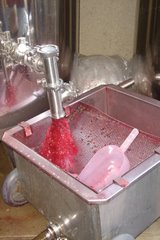
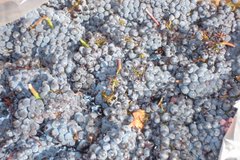
The vineyard includes a wide variety of grapes and a large experimental section. This year will be the first year August Hill will be harvesting its grapes, as workers have been busy netting grapes to protect them from birds and preparing them for harvesting and crushing.

The August Hill Winery is adjacent to the vineyard and was built in 2004. All phases of wine-making from harvesting, crushing and fermentation to barrel aging and bottling are monitored by the winemaker, Mark Wenzel. Wenzel holds an engineering degree from the University of Florida and has developed his winemaking experience by taking viticulture and winemaking courses and working closely with people in the wine industry.

The August Hill Winery Tasting Room is in Utica. In addition to the handcrafted wines, the Tasting Room offers artwork by Tara Ginocchio and other artists, gourmet chocolates, artisan cheeses and more.

For more information, call the August Hill Winery at 815-667-5211 or visit
www.augusthillwinery.com .

Friday, August 10, 2007

Vintage Illinois


Yesterday I had the opportunity to speak with Maria Mamoser, of Prairie State Winery, one of the founders of the Vintage Illinois Festival in Starved Rock.

It is only 35 more days until this magnificent festival opens, featuring twenty-three Illinois wineries. The event is only open to 23 participants and spaces fill up immediately! This years’ event runs Saturday, September 15 – Sunday, September 16.

The two day festival includes live music, wine instruction by Bradley Beam, the state enologist, and of course, wine tasting! For more information and ticket details visit
www.vintageillinois.com

Thursday, August 9, 2007

Never. Give. Up.

Many thanks to Chuck Sudo of the Chicagoist for keeping tabs on this legislation!


HB 429 Passes, Litigation Imminent

Yesterday the Illinois House approved legislation regarding how customers will be able to buy their wine. It's
a story we've been keeping tabs on here at Chicagoist for a while.

Supporters of the bill champion HB 429 as a victory for Illinois consumers. They claim that the uniform 12-case limit shared by in- and out-of-state wineries, and the establishment of a permit system allowing smaller out-of-state wineries to sell their product directly to retailers, will broaden the variety of wine available to consumers. Opponents of the bill say that HB 429 is not necessary; since Illinois was already a state with "full reciprocity," arguing that consumers already had unfettered access to a wide array of wine through out-of-state retailers and wine clubs. Chicagoist received a press release from
Specialty Wine Retailers Association Executive Director Tom Wark detailing this argument. You can read it here (Adobe PDF file).

Additionally, HB 429 saw substantial opposition from the state's two largest wineries,
Lynfred Winery in Roselle and Galena Cellars Vineyard & Winery, who argue that they and similar sized wineries in Illinois will see a substantial drop in revenue from direct sales, by having to utilize a wholesaler to sell their wine, under the new measure. Neither of these points were reported in the AP wire story referenced by Crain's yesterday.

Indeed, it looks as though the state's wholesale distributors are the big winners in all this. They've been lobbying hard for this legislation for close to two years, putting substantial amounts of money into the campaign funds of many of the bill's sponsors. If anything, the bill ensures that wholesalers are the first in line and get to have the pick of the litter. Wark has previously promised that SWRA would take HB 429 to court if it passed, and an e-mail we received from Lynfred marketing director Christina Anderson-Heller indicated that neither they nor Galena have given up the fight.

We have to ask: the state legislature can't agree on a budget and state employees are days away from not being paid, yet this bill managed to pass. We're currently wondering where their priorities lie.

By Chuck Sudo

Wednesday, August 8, 2007

Not Saying Cheers.

Not all saying Cheers! to wine deal

Lynfred Winery, Galena Cellars oppose state plan

By John PattersonDaily Herald State Government Editor jopatterson@dailyherald.comPosted Wednesday, August 08, 2007
SPRINGFIELD – How wine is bought and sold in Illinois could change under a proposal lawmakers approved Tuesday and sent to Gov. Rod Blagojevich.

And while most Illinois wine makers appear to welcome the changes, some suburban wineries fear the changes could price them out of business.

The proposed law would limit to 12 cases a year the amount of wine someone could buy directly from a winery, whether the winery is in Illinois, California or anywhere else. The limit had been two cases per person per year.

And the law would prohibit wine purchases from out-of-state wine retailers, something critics said will restrict what wines Illinoisans have access to and likely result in higher prices.

Tom Wark, executive director of the California-based Specialty Wine Retailers Association, predicted the law will ultimately be declared unconstitutional and struck down.

The proposal is in response to a U.S. Supreme Court ruling that said states must treat out-of-state and in-state wineries the same.

The deal that cleared the Senate on Tuesday was viewed as preserving Illinois’ unique system of wine maker, distributor and retailer.

Some supporters said Illinois could ultimately see more wine business if out-of-state wine retailers decide to set up shop in Illinois to avoid the proposed law’s restrictions.

But some lawmakers said successful Illinois wineries would suffer as well and the new regulations would punish them for growing. As proposed, the largest Illinois wine producers would lose the ability to sell directly to restaurants and retailers and instead would have to enter into agreements with distributors.

Local wineries such as Galena Cellars in Geneva and Lynfred Winery in Roselle have said signing agreements with distributors could make their wines too expensive for the common connoisseur.

Distributors want a piece of the profit in exchange for carrying the relatively few bottles of wine small wineries create. That could ratchet wine prices up to $30 a bottle for companies like Galena Cellars and Lynfred Winery.

Both companies have about a year to strike a deal with a distributor to continue direct sales of their wines.

Fred Koehler, owner of Lynfred Winery, could not be reached for comment Tuesday, but he previously decried such severe direct shipping limits on his business as a possible kiss of death.

“It’d put us out of business,” Koehler said when such changes were first proposed in 2005. “That’s how serious it is. Why does the state want to put up more challenges for businesses when we’re an industry that’s trying to grow?”

Supporters said such provisions were necessary to show the proposed law didn’t unfairly target only out-of-state wineries.

There are nearly 70 wineries in Illinois. Most are represented by the Illinois Grape Growers and Vinters Association, which called the new law a victory for 95 percent of Illinois’ grape gurus.

David Stricklin, a consultant for the organization, said the vast majority of wineries in the state are much smaller than the Galena Cellars or Lynfred Winery operations. While those companies produce in excess of 85,000 gallons of wine a year, most other local growers fall below the 25,000-gallon mark.

That is now the threshold that triggers mandatory agreements with distributors to continue direct shipments of wine.

“This is a good bill for consumers, and will be a bill that furthers the dynamic growth in our industry,” Stricklin said. “For the bulk of wineries in Illinois, this is an extremely good result.”

Tuesday, August 7, 2007

Sadly It Effects the Growth


Unfortunately a battle has been lost that we have been fighting for quite some time now. The Illinois Wine Industry has grown from nothing to 70 wineries in the past 30 years and sadly a defeat upon its growth has occurred. We sincerely thank you for your letters to senators and all your efforts! Don’t worry, we’ll prevail!!!


State senate OKs wine sales proposal

By Kurt Erickson
kurt.erickson@lee.net

SPRINGFIELD -- The state Senate approved legislation Tuesday that would change how wine can be bought and sold in Illinois.

The measure, which was sent to the governor’s desk a 49-5 vote, would place a 12-case limit on how much wine a consumer can purchase directly from any winery. The current limit is two cases.

At the same time, it would bar consumers from buying wine directly from a wine distributor. Instead, they would have to buy the product from either a winery or a retailer.

The measure, in negotiations for more than two years, was triggered by a U.S. Supreme Court ruling that requires states to treat in-state and out-of-state wineries the same.

The legislation is viewed as positive for about 95 percent of the industry in Illinois, which is comprised of 70 mostly small wineries.

Alexa Tuntland, owner of the Waterman Winery and Vineyards in northern Illinois, said the legislation has been a ’’big concern’’ among her colleagues in the industry.

’’We don’t want to lose the ability to be able to distribute our wine,’’ said Tuntland.

"It’s a good deal for me," added Rick Mamoser, owner of Prairie State Winery in Genoa. "It helps the vast majority in our industry."

Under the proposal, a small winery will be limited to distributing 5,000 gallons directly to retail stores and restaurants.

’’It’s good for consumers, we believe,’’ said Robert Myers of the Associated Beer Distributors Association of Illinois.

But larger wineries say the measure could hurt their business because it forces them to use a distributor to sell their product.

Fred Koehler, president of Lynfred Winery in Roselle, said the legislation could cost his company $150,000 to $200,000 a year.

’’It just isn’t fair,’’ said Koehler.

Scott Lawler, president of Galena Cellars in northwest Illinois, said the legislation will hurt Illinois’ fledgling wine industry.

’’This is going to shut the door on what we’ve accomplished,’’ said Lawler, whose winery also is considered among the largest in Illinois.

The legislation is House Bill 429.


Always fighting the fight. . .


Christina Anderson-Heller, with the Illinois Winemakers’ Alliance

Thursday, August 2, 2007

Help Us Win the Grape Battle!


HELP US FREE THE GRAPES!!!
About a week ago I posted a blog regarding House Bill 0429 and Senate Bill 0123. We were fighting the fight and everything was quiet for a while, but now we know there will be a hearing before the Executive Committee in Springfield this coming Monday.

We want to tell you why you should know about and vote NO to Senate Bill 0123 (more information can also be found at
http://www.ilga.gov/ ).

First of all, the Senate bill will be affecting large Illinois wineries ability to direct distribute any wine (currently at 10,000 gallons annually, will be reduced to zero gallons).

Secondly, HB 429, if passed as written, would prohibit you, the consumer, from purchasing wine from out of state wine retailers. You have possessed this right for 15 years. Now it will disappear. This means that you will no longer be able to search the Internet for hard to find wines or look for the best prices on a wine.

There is no justification for stripping you of this right other than it would benefit a small group of power wine distributors who would benefit by taking even greater control over the Illinois wine market. Write to the members of the committee and tell them to assure your right to by wine from out-of-state retailers is protected or to vote against HB 429.

We beg and urge you to contact your Illinois Senator and tell them to vote NO for Senate Bill 0123 and House Bill 0429!!! Find and contact your Illinois Senator by visiting
http://www.elections.il.gov/DistrictLocator/AddressSearch.aspx. We also urge you to send a note to Executive Chairman, Senator Ira Silverstein, at silverstein@senatedem.state.il.us .

Let’s FREE THE GRAPES!


Wednesday, August 1, 2007

Illinois Wine Trails Getting Attention

Northern Illinois wineries received some nice press today as the food section’s lead story in the Chicago Sun-Times.


Illinois uncorked
Considering a trip to wine country? Skip the flight and head to one of our area's wineries

August 1, 2007

BY CHUCK SUDO

When people talk about planning a daytrip to a vineyard, the regions that come to mind first are obvious: Napa, Sonoma, Oregon, Washington, even Michigan and New York.
What about Illinois?

It isn't so far-fetched. According to the Illinois Grape Growers and Vintners Association, the state's grape growing and wine industry is growing by leaps and bounds. A January study by the association and MKF Research, a valuation firm specializing in wine business, counted 68 wineries and 450 grape growers in Illinois. Of the wineries, 10 have opened in the last two years. Two-thirds of Illinois' 450 counties have at least one vineyard.


Last November, the Downstate Shawnee Hills region was designated by the federal Bureau of Alcohol, Tobacco and Firearms as an American Viticultural Area for the distinctive climate and geographic characteristics that make it suitable for grape growing. Wineries in the region can list the Shawnee Hills designation on their labels when 85 percent or more of the wine they produce comes from grapes grown in that region.

But wine snobs, fans of the movie "Sideways" and folks just looking for a quick day trip to a winery don't need to pack up the car and head Downstate. For Chicago area residents, getting to a winery can be as simple as hopping on a Metra train -- or even a bus to the South Side.

Roselle, about 25 miles northwest of Chicago, is home to the Lynfred Winery, the oldest and largest operating winery in Illinois. Situated on one acre, Lynfred produces more than 50 varietals and 25,000 cases of wine a year, according to marketing director Christina Anderson-Heller, who works closely with founder and president Fred Koehler to raise awareness of Lynfred Winery and Illinois wine in general.

"We ship all of our grapes to the winery, with about 90 percent coming from the West Coast -- California, Oregon and Washington state," Anderson-Heller says. "We also bring in some grapes from Michigan, New York and Downstate Benton and Ava."

Lynfred Winery's winemaker, Chilean-born Andres Basso, is a veteran of Concha y Toro, Napa Valley's Merryvale Vineyards, and Gordon Brothers Family Vineyards in Washington. Basso's wines have clean, prominent fruit flavors and tangy finishes. Lynfred's wines were recently awarded two double golds at the Amanti del Vino festival in Mystic, Conn., and a "best in show" award for its rich, jammy Cabernet/Shiraz blend. Lynfred's Petite Verdot recently earned a double gold from the prestigious Tasters Guild.

Lynfred Winery has two "Tasting deVine" tasting rooms in Naperville and Wheaton. A four-suite bed-and-breakfast is located at the winery. Each room pays homage to the world's classic wine regions -- France, Italy, Germany and America. Guests are treated to elegant meals prepared by Elk Grove Village native Chris Smith. His fresh-baked bread from a wood-burning oven is not to be missed.

Lynfred wines can be found at Shaw's Crab House, Tin Fish in Tinley Park and Oakbrook Terrace, Rooster's Barn and Grill in Bloomingdale and Pilot Pete's at the Schaumburg airport.

The seven-year-old, family-owned Fox Valley Winery has three tasting rooms in Geneva, Oswego, and Sandwich. The winery cultivates 27 acres of grapes at the Faltz Family Vineyard in Sheridan, near the Sandwich tasting room. The grapes are harvested and shipped in refrigerated trucks to the Oswego location for venting.

"The grapes grown at our vineyard are in varying stages of maturity," says general manager Kori Faltz, "so we bring in different grapes from the Shawnee Hills region to compensate."

Fox Valley's wines have hearty fruit overtones made from chambourcin and chardonel grapes. Folks interested in pairing food with Fox Valley's wines can do that at Emmett's Ale House in Downers Grove and Oswego, Walter Payton's Roundhouse in Aurora and Stockholm's Vardshus in Geneva.

Tours of the Faltz Family Vineyard are held throughout the year. A harvest festival is held every September, complete with grape stomping and re-enactments of baseball as it was played in the 1800s. This year's festival is Sept. 22.

Urban dwellers who prefer to stay within the city limits can head to the Wild Blossom Meadery & Winery in the Beverly neighborhood on the South Side.

Located in a wine- and beer-making supply store on the dry side of Western Avenue, owner Greg Fischer and vintner/meadmaker Kazys Ozelis, produce an amazing array of fruit wines and meads. Meads are fermented wines traditionally made from honey, but may also be made from some fruits.

The selections at Wild Blossom range from the light and dry blanc de fleur, a wildflower wine; "Sweet Desire," a traditional mead aged in bourbon barrels and teeming with dark fruit flavors, and a very dry sparkling cran-nectar.

Wild Blossom also offers winemaking classes. Classes range in price from $95-$185 and yield up to two cases of wine or mead. The winery also sells supplies for making wine or mead at home.

Chuck Sudo is a Chicago freelance writer.